
Immigrant Rights vs. Citizen Rights: What Desi Families Should Know
Given the current wave of immigration enforcement—sweeping up asylum holders, undocumented immigrants, immigrants with special status, and sometimes even citizens—it can be very confusing to know what the U.S. Constitution and U.S. law say about the rights of people who are not native-born citizens.
For many South Asian families, immigration status can vary within a single household. Spouses often have different statuses because of emotion, issues related to property in the home country, and timing. My husband became a citizen long after I did, as we were grappling with the status of a family home. Understanding the differences matters—especially these days.
The most important point is this: being a noncitizen does not mean being without rights. The Constitution protects “persons,” not only citizens, and noncitizens—including undocumented immigrants—generally have constitutional protections such as due process.
The immigration categories Desi families could encounter
U.S. Citizen: Citizens have the broadest rights. Citizens can vote in federal elections, obtain a U.S. passport, serve on juries, and generally cannot be deported. Naturalized citizens have the same basic constitutional rights as citizens born in the United States, although naturalized citizenship can be challenged through a formal denaturalization process in limited circumstances involving unlawful acquisition of citizenship. Citizenship also makes you eligible for certain elected offices and federal positions.
Lawful Permanent Residents (green-card holders): Permanent residents can live and work permanently in the United States and have many of the same basic constitutional protections as citizens. But they are not citizens. They cannot vote in federal elections and can, in certain circumstances, lose their status and face removal proceedings—for example, following certain criminal convictions or immigration violations. They must also maintain their permanent-resident status and periodically renew their physical green card.
Temporary Visa Holders: Temporary visa holders include many Desis who come to the United States to work, study, or visit. H-1B workers and their families, F-1 students, J-1 exchange visitors, and others can legally live in the country while complying with the conditions of their particular visa. Their right to remain is more limited than that of a green-card holder: losing or violating their status can jeopardize their ability to stay. However, they also have the following rights:
Be paid fairly
Work in a healthy and safe workplace
Ask for help from union, immigrant, and labor rights groups
Leave an unsafe job
Be free from discrimination, harassment, and exploitation
Asylees and Refugees: People seeking asylum and refugees have been granted protection because they face persecution or have a well-founded fear of persecution in their home country. They can generally work legally and may later become permanent residents. USCIS provides a pathway for asylees to obtain green cards. Here are the rights of this category of immigrants:
Protection from Deportation: The legal right to remain in the U.S. safely without being returned to a country where life or freedom is threatened (non-refoulement).
Right to Work: Immediate authorization to work in the U.S. using valid documentation (such as an Employment Authorization Document or direct status).
Path to Permanent Residency: The right to apply for a Green Card (Permanent Resident status) after being in the U.S. for one year following a grant of asylum or refugee status.
Family Reunification: The right to petition to bring a spouse and unmarried children under 21 to the United States.
Public Assistance: Access to transitional cash assistance, medical help, and social services coordinated through resettlement agencies.
Undocumented Immigrants: People without lawful immigration status also have constitutional rights while they are in the United States. For example, they can assert the right to remain silent and have due-process rights in immigration proceedings. But they are subject to immigration enforcement and may ultimately be removed from the country.
What to do if you encounter an immigration official or ICE agent?
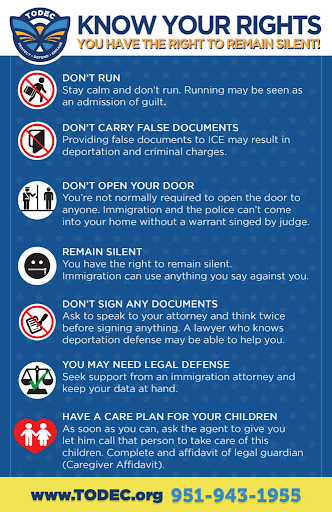
The most important thing for you to do in such an encounter is to KNOW YOUR RIGHTS. This useful graphic provides a quick reference: